爱情魔发师
How technology boosts Beijing's air pollution governance_我的网站

A | TEL AVIV, Israel -- Ayelet and Or Sella both pause for a few seconds as they recall the moment they were finally able to embrace their cousins Judith and Natalie Raanan at home in Israel a day after the mother and teenage daughter were released by their militant captors in the neighboring Gaza Strip."I realized I hadn't breathed for two weeks," Ayelet told ABC News' Matt Gutman in Tel Aviv during an interview airing Monday on "Good Morning America.""I've never felt a hug this intense in my life," Or added.But the nightmare is far from over as eight of their family members are still being held hostage by the Hamas militant group in Gaza. Three other relatives were killed. Ayelet and Or, who are siblings, are calling on the Israeli government to secure the release of the remaining hostages before launching a ground invasion into Gaza."We hope that they are alive. We hope that they are not injured," Or told ABC News. "And we hope and urge anyone that has any influence to do everything they can to bring them back as soon as possible.""We don't have the privilege to be happy or to celebrate. We don't have the privilege to mourn," Ayelet added. "We cannot rest. Getting Judith and Natalie back, it is not the end. It is the beginning."Judith, 59, and Natalie, 17, who both have dual Israeli-American citizenship and reside in Evanston, Illinois, were visiting family in southern Israel to celebrate a relative's birthday and the Jewish holidays when Hamas carried out an unprecedented incursion from Gaza on Oct. 7. More than 1,400 people were killed, thousands more were injured and over 200 were abducted that day, according to the Israel Defense Forces."It was unimaginable then and it still is," Ayelet said. "We haven't slept ever since and we cry at night."The Israeli military has responded with a total siege and blockade of Gaza, sparking a humanitarian crisis while killing at least 4,385 people and injuring 13,561 in the Hamas-ruled territory since Oct. 7, according to the Palestinian Ministry of Health.Over the weekend, the Israel Defense Forces announced it "will deepen our attacks to minimize the dangers to our forces in the next stages of the war," indicating a ground invasion appeared imminent.Judith and Natalie were the first hostages to be freed on Oct. 20. Hamas said in a statement at the time that it released them for humanitarian reasons in an agreement brokered by the government of Qatar.Israeli Agriculture Minister Avi Dichter, a former chief of the Shin Bet security agency, told ABC News last week that officials will do everything they can to secure the release of all hostages but that the "first and last priority" is destroying Hamas.ABC News has learned that Israeli and U.S. officials have asked Judith and Natalie for any granular details about their ordeal -- like what did they see, hear and smell -- in hopes that the information could provide key intelligence about the remaining hostages.Ayelet and Or said their cousins are "physically healthy right now" and that the pair "kept each other safe" but "it is not our story to tell." They declined to share further details about what the mother and daughter endured in captivity, citing fears that Hamas could take vengeance on their other family members being held."We can't even image what they've been through these last two weeks," Or added. "It's going to take some time to sink in for them."It was also unclear why Judith and Natalie were the first to be freed."I feel so lucky but also a little guilty," Ayelet said. "There are so many others, we don't know why them."Ayelet noted that their family has not been contacted by a representative of the Israeli government "until now."Within hours of being freed, Judith and Natalie spoke on the telephone with U.S. President Joe Biden and expressed their eagerness to help "bring everyone back," according to Or."They are so brave and so strong," Or said."They are handling this better than I would expect," Ayelet added.。
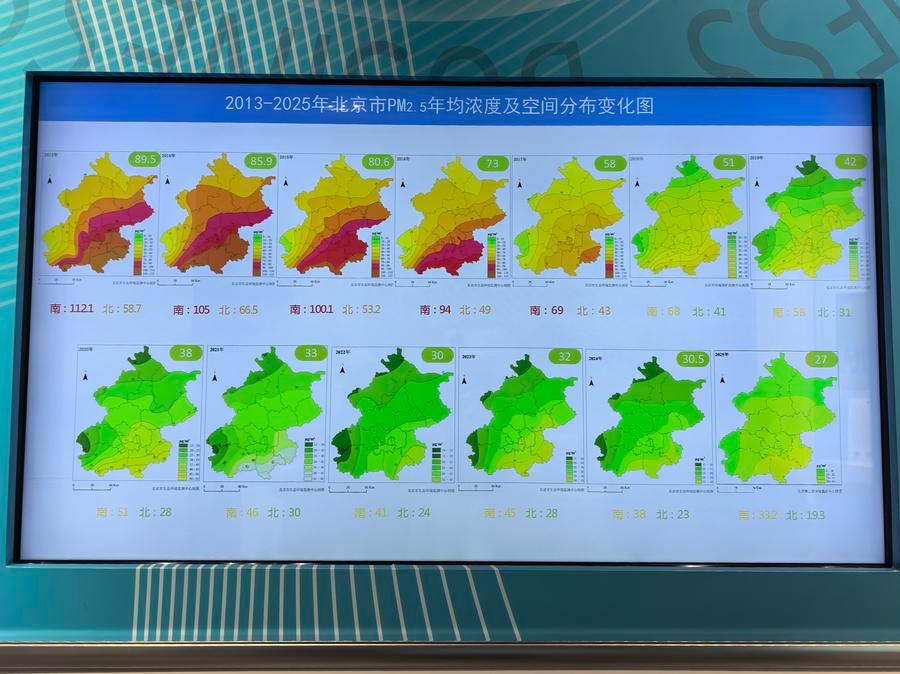
In 2025, Beijing recorded 311 days with good air quality and only one heavily polluted day, compared with 58 heavily polluted days in 2013, when the city officially began releasing PM2.5 monitoring data. The annual average PM2.5 concentration, a key indicator of air quality, fell from 89.5 micrograms per cubic meter in 2013 to 27 micrograms per cubic meter in 2025, a decline of nearly 70 percent.
The progress has drawn international attention. The United Nations Environment Programme has highlighted Beijing's experience in improving air quality as a model for other cities.
According to experts at the Beijing Municipal Ecological and Environmental Monitoring Center, the cleaner air is the result of a comprehensive system integrating environmental monitoring, scientific analysis, policymaking, regional cooperation and law enforcement -- with digital technologies now woven into every link of that chain.
MORE TARGETED APPROACH
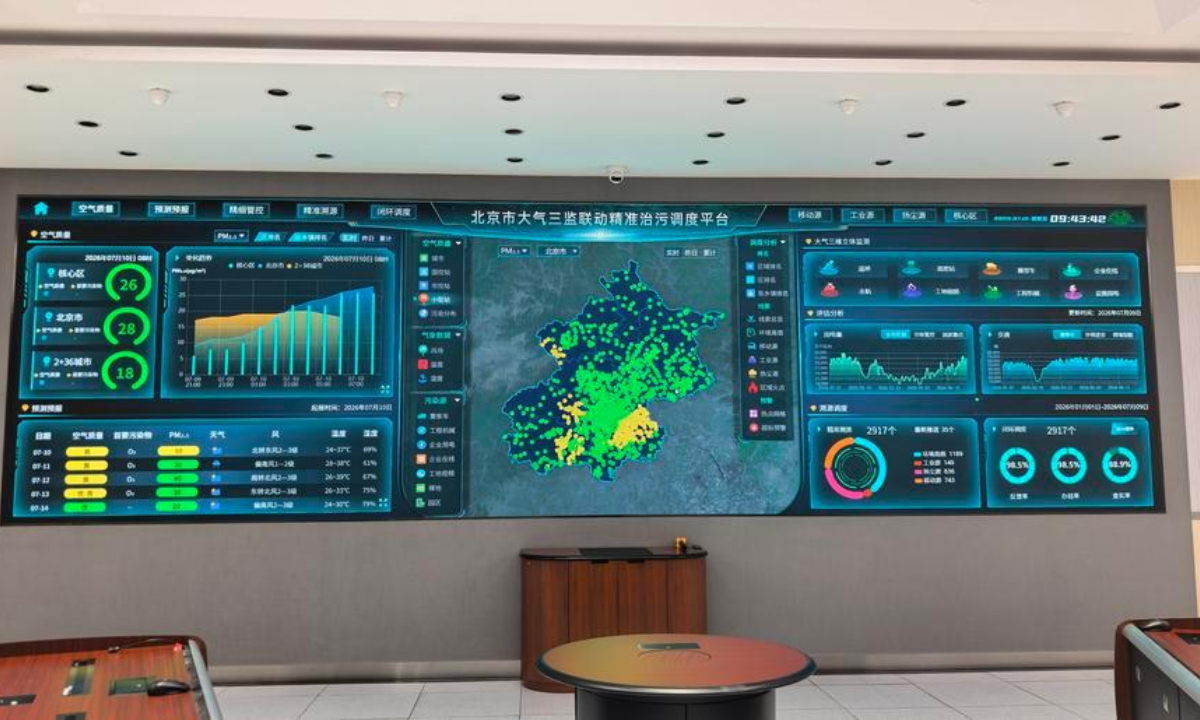
Effective governance begins with accurate monitoring. Beijing has established a multi-level air-quality monitoring network. Figures show 35 standard monitoring stations across the city continuously measure six major pollutants, while more than 1,000 compact sensors deployed across communities and townships provide more detailed information on local air-quality variations.
The monitoring system was gradually built by the Beijing Municipal Ecological and Environmental Monitoring Center, one of China's earliest ecological and environmental monitoring institutions, responsible for monitoring Beijing's air, water, noise, soil environments and ecosystems.
The center has developed an analytical system that can identify around 125 components of PM2.5, covering most of its composition and helping researchers trace pollution sources.
"Source analysis helps us identify the major contributors to pollution at different stages, providing a scientific basis for policymakers to target key emission sources," said Li Yunting, technical director at the center.
Coordinated by the Beijing Municipal Ecology and Environment Bureau, the center has conducted four rounds of PM2.5 source analysis studies with other institutions, with results released in 2014, 2018, 2021 and 2025.
The latest analysis showed that regional transport contributed 57 percent of Beijing's PM2.5 pollution. Among local sources that accounted for the remaining 43 percent, vehicle emissions and residential sources represented the largest share of pollution, a distinctive characteristic of a major international metropolis.
The monitoring results have provided scientific support for a series of pollution-control measures. For example, Beijing has promoted new-energy vehicles to reduce transport emissions and adopted advanced techniques, including air-supported membrane structures, to control dust emissions. Meanwhile, coal combustion pollution, once a major contributor, has almost been eliminated and is no longer listed among the main sources, reflecting broader national efforts to reduce coal consumption, promote clean energy and upgrade heavily polluting industries.
With PM2.5 concentrations now at relatively low levels, further gains in air quality will depend on more targeted, science-driven approaches.
SMARTER ENVIRONMENTAL GOVERNANCE
Beyond monitoring pollution, Beijing has built a data-driven environmental governance system that links monitoring, regulation and enforcement in a closed loop from detection to action and follow-up evaluation.
Developed by the center and known as the innovative regulation-monitoring-inspection linkage model, the system integrates artificial intelligence, the Internet of Things, satellite remote sensing and vehicle-mounted monitoring technologies to pull together environmental data from multiple sources onto a unified platform.
"The system brings information that was once scattered across different departments onto a single platform," said Zhang Likun, director of the smart system division at the center, adding that this enables off-site enforcement and joint cross-sector actions involving housing, water resources and transportation, significantly improving the efficiency and precision of environmental management.
Using more than 30 intelligent algorithms, the platform automatically analyzes data and identifies potential pollution risks, based on which monitoring staff identify the most pressing problems and forward them to enforcement departments.
The approach has already drawn international attention. Clean Air Asia, an international nongovernmental organization focused on improving air quality across Asia, featured the system as a representative case study in its "China Air 2025" report. The model was also presented at the 2026 Better Air Quality Conference and recognized with the Certificate for Clean Air Best Practice Sharing.
China has integrated ecological conservation into its modernization drive. As the country speeds up efforts under the Beautiful China Initiative, Beijing's experience demonstrates how technology can support more precise, coordinated and sustainable environmental governance.
。
Current article:http://utc.feishuozhuangkeqi.cyou/list_ya3j2/2o1.html
Published on:06:56:17